Control complexity. Build architecture that lasts.
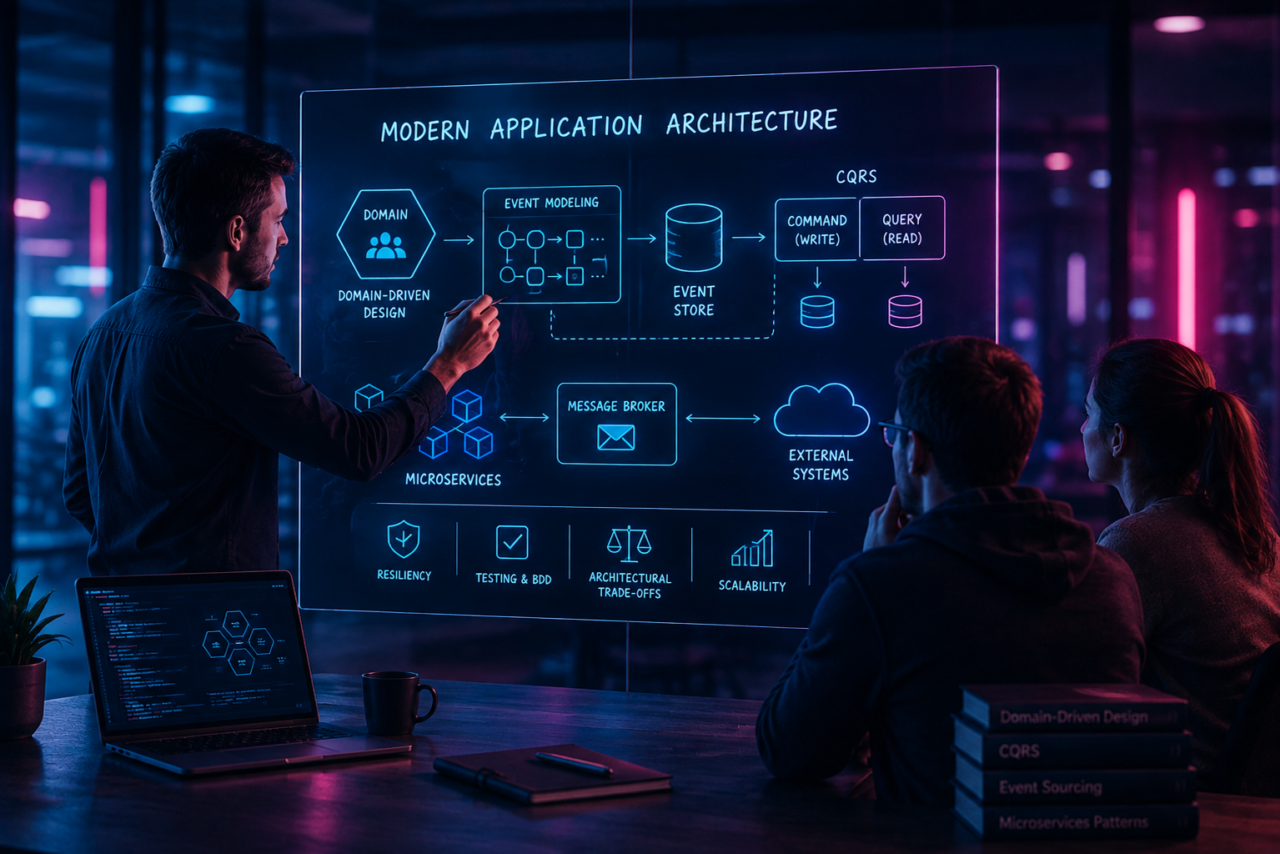
As software systems grow, so does complexity. Modern Application Architecture teaches you practical, technology-independent methods for designing scalable, resilient, and maintainable systems. Over two days, you will learn how patterns such as Domain-Driven Design (DDD), CQRS, Event Sourcing, Event Modeling, and Microservices help you understand domains, structure applications, and make better architectural decisions. You will also explore key trade-offs such as SQL vs NoSQL, monoliths vs microservices, and how to design reliable distributed systems.
The training is highly hands-on, combining theory with live demonstrations and practical exercises based on real architectural problems. You will practice applying architectural patterns in context, understand when to use them, and build a shared vocabulary for discussing and designing complex systems. The course is designed for experienced developers and software architects who want to turn growing complexity into deliberate, well-informed architectural choices.
Concrete benefit: You will gain practical, technology-independent skills for designing more maintainable, resilient, and scalable applications.
To whom is this training for?
This training is for you if you are a software developer or architect who wants to make better architectural decisions and build applications that remain maintainable as they grow.
It is particularly valuable if you work with complex or distributed systems, growing codebases, or microservices, and need practical ways to manage complexity across your architecture.
If you already have a few years of object-oriented development experience and want to deepen your understanding of DDD, CQRS, Event Sourcing, Event Modeling, and modern architectural patterns, this training gives you a technology-independent toolkit you can apply across languages and platforms.
Additional information for participants
You should preferably have worked for a few years as a developer in an object-oriented language. No specific framework or platform experience is required, the course focuses on patterns and principles that apply across languages and technologies.
Training will be held in English.